


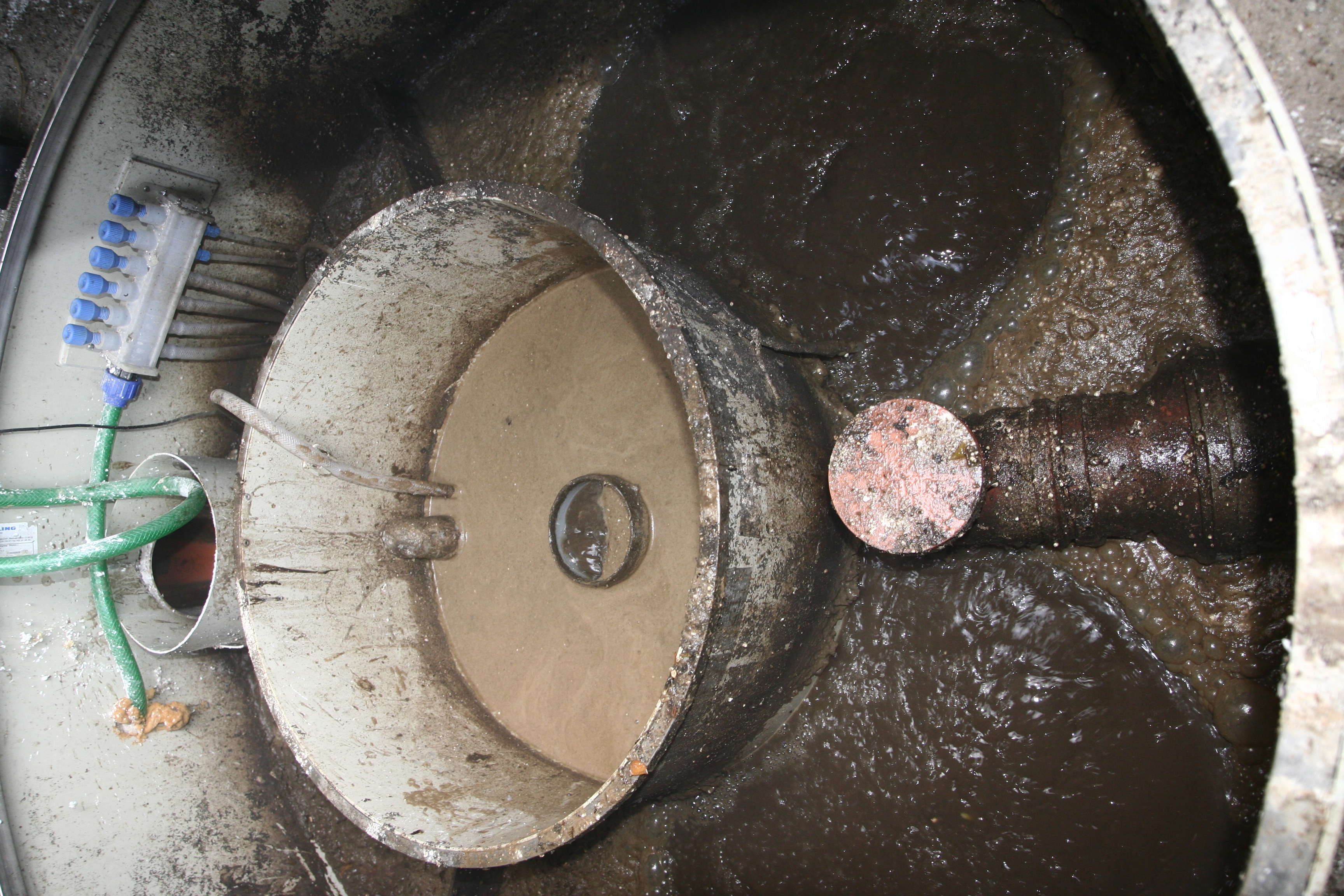
Lack of activated sludge
Microorganisms in the form of activated sludge are absolutely necessary for the good functioning of the treatment plant. Their lack can have many causes, but it is always a fundamental problem.
One of the common symptoms of a lack of sludge is the formation of a white, "soapy" foam on the surface of the activation tank. The source of foaming is detergents in wastewater, which break down very quickly during normal operation of the treatment plant and do not cause foaming. If there are no organisms present that would be able to eliminate them, they manifest themselves precisely by foaming. This condition is typical for new WWTPs that have not yet been vaccinated, or for treatment plants that have been so-called "flushed".
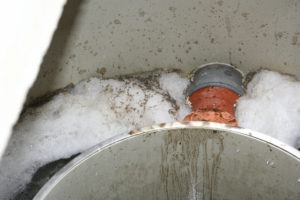
Typical "detergent" suds - this is wrong
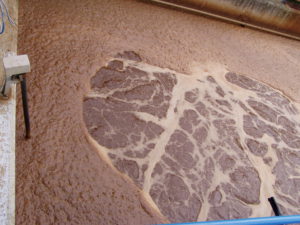
Biological Foam - This is OK
It is important not to confuse detergent foam with so-called biological foam. The "biological" one is made up mainly of clusters of microorganisms, it has the character of rather whipped sludge. it is often a manifestation of an insufficiently de-sludged treatment plant. However, if it does not leak into the drain or out of the treatment plant, there is no problem. The condition in the picture above is perfectly acceptable.
Lack of sludge (in activation) can also be caused by a malfunctioning return sludge recycle. The activated sludge then lies in the settling tank, or is even flushed away from the treatment plant.
Rozpadající se kal
Slurry can break down for a number of reasons. Usually, this is a serious problem that significantly worsens the quality of the outflow in practically all indicators. It can gradually lead to complete silting of the treatment plant and its failure.
Causes of Decaying Sludge:
- too old sludge age (you don't remove enough sludge)
- excessively high loading of the treatment plant, especially with nitrogen (often manifested by a very low pH)
- low loading of the treatment plant - microorganisms have nothing to eat
- toxic substances in the influent
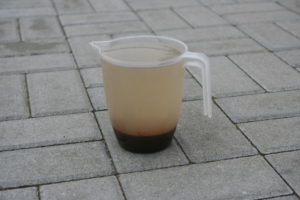
Decomposing sludge - this is not how it should look
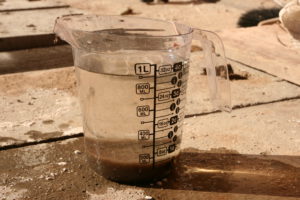
Well settling sludge - this is what it should look like
The solution to the disintegrating sludge problem can vary depending on the cause. It is optimal to remove the cause. It is also possible to use polymeric flocculants, which stick the flakes together nicely, but these are not always readily available. Intensive de-sludging sometimes helps, and almost always, at least in the short term, inoculation with functional sludge.
Nadbytek kalu
Because microorganisms convert about half of the incoming pollution into carbon dioxide and water and the other half into sludge, in a well-functioning wastewater treatment plant there is a constant increase in sludge, which then needs to be removed from the system (the optimal condition is when the sludge is replaced within about 14 days - the age of the sludge is then 14 days). If the sludge was not removed, its concentration would reach such values that it would no longer be possible to separate the purified water from the sludge by sedimentation, and the sludge would then begin to flow into the drain, which would thereby degrade it. The usual manifestations are an increase in viscosity - the activation mixture takes on the character of a honey-like liquid. Furthermore, it is the formation of biological foam and "blanket" on the surface of the tanks.
The help is very simple and consists in draining the wastewater treatment plant.
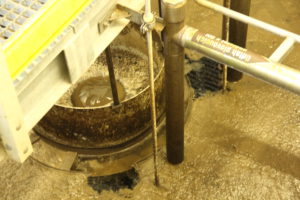
Excess sludge can be manifested by the formation of foam and "blankets"
Nedostatek kyslíku
In addition to microorganisms, the activation treatment plant also needs oxygen. Its deficiency is manifested by a change in the color of the sludge, which turns black (this is due to the fact that reduced forms of iron and sulphides are formed, which are black). In an extreme case, the treatment plant can turn white, but in any case this condition is accompanied by a strong smell of lower fatty acids, especially buttery (the smell of rancid butter) or hydrogen sulfide (rotten eggs).
Lack of oxygen can be caused by a defect in the aeration system or inappropriate aeration settings. Then it is enough to remove the defect or extend the aeration intervals. But the cause can also be the overloading of the treatment plant, when even the maximum amount of air supplied is not sufficient and then the remedy is more complicated.