


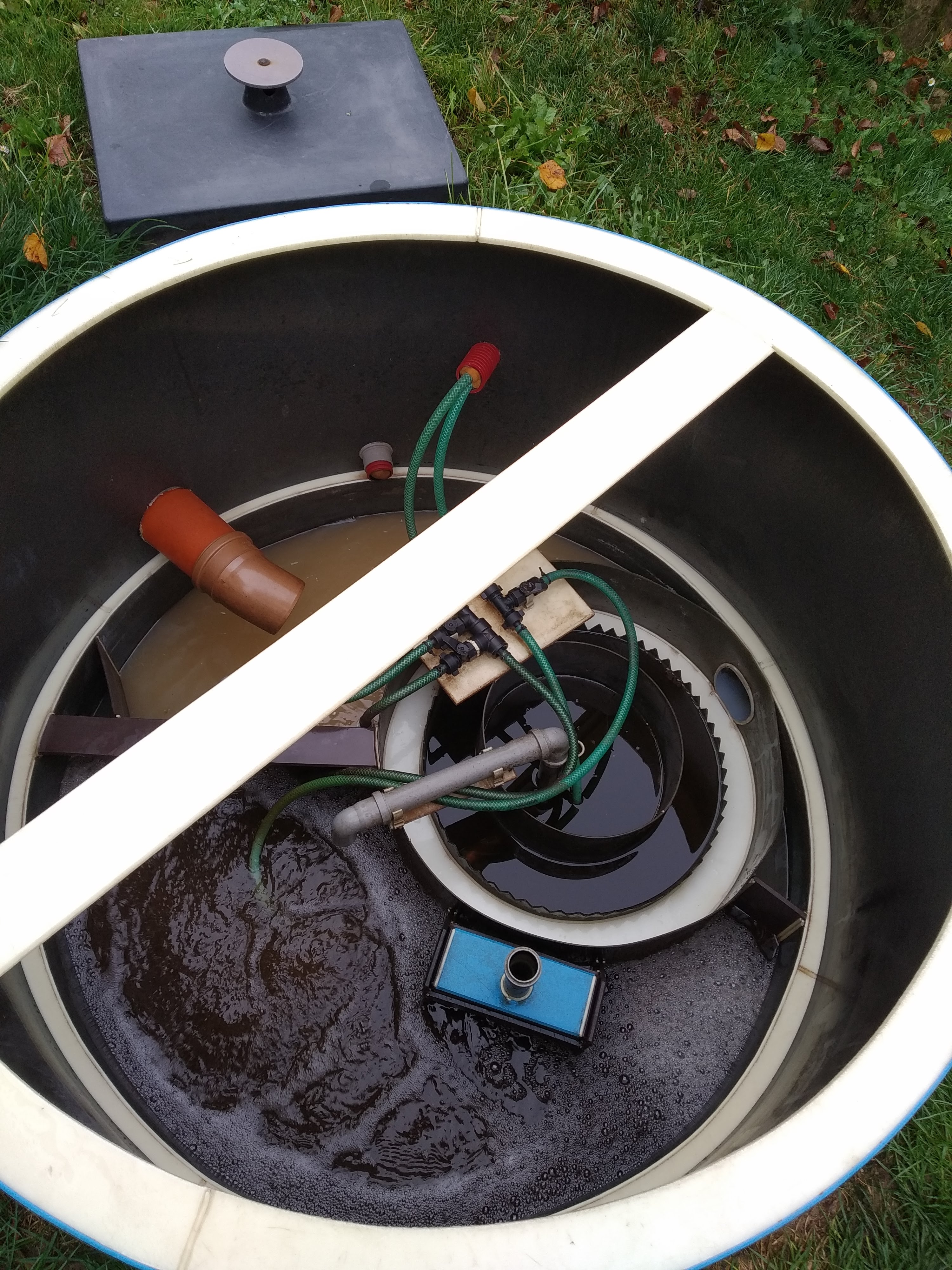
If you have a wastewater treatment plant at home, it's good to realize why I have it. And why should I care about him anyway? If you are taking up a piece of your garden just so that the lady at the office will stop sending you parcels, or so that someone else will allow you to rebuild your house, you probably won't have much motivation to maintain it and operate it properly.
But you don't clean the water because of some lady behind the table. You do it so that the slop in the village doesn't stink under your nose all summer. So your kids can build dams on the creek without getting treated for a rash next month. So that your dog does not carry used menstrual tampons as souvenirs from walks. So that the fish from the pond, which the neighbor invites you to taste, does not taste mainly of the popular fabric softener. You will surely complete the next ABY yourself. Short and simple: you clean the wastewater mainly for YOURSELF.
Satisfaction of the responsible official, possibly the flora and aquatic plants in the area, is just a nice bonus to the fact that you are surrounded by a safe, pleasant and healthy environment.
That's why.
What is wrong
A lot of people will probably disagree with me now, but being connected to a sewer terminated by a central city or municipal wastewater treatment plant is just great. All you have to do is pay your sewer regularly and be sensible about what you put down the drain. Being connected to the sewer system is simply easy and convenient, albeit at the expense of often slightly higher financial costs.
However, the main advantage of a large treatment plant is that it usually works and the cleanliness of the effluent from it is usually many times better than from domestic treatment plants. In fact, in the vast majority of cases, if a "large" treatment plant is properly designed and in good technical condition, the effluent from it meets the legal requirements. On the other hand, it quite often happens that, although the household treatment plant is properly designed and in good technical condition, the drain does not meet these requirements. How is this possible?
The main reasons are two: Inequality and Ignorance.
Unevenness
Unevenness means that there are significant jumps in the amount and composition of wastewater. Imagine it: on a weekday morning you get up, go to the toilet, brush your teeth and so on. So does your significant other, one child, the other child. That is, a large amount of relatively dirty water at once. Then nothing flows to the treatment plant for a long time because everyone is at work or school. In the afternoon, the mother cleans, disinfects the toilet with domestos and wipes with spring water and a suction cup. He pours the water into the waste, but while in the large sewage system it would mix with water from Novak, Vopěnk and Vycudilík, who don't really clean these days, and thus the concentration of disinfectants would be reduced to the non-disinfecting limit, you are connected to the household treatment plant yourself. So it has nothing to dilute or react with, and the substances contained in the water thus act with full force on your treatment plant. In this case by deadly force.
Followed by cooking dinner (a little more clean water) and washing the dishes (a little very dirty water if you have a dishwasher, a moderate amount of dirty water if you don't have a dishwasher)) In the evening, everyone goes to bathe or shower, which means a lot of relatively clean water. On Saturday, the whole family goes for a day-long visit to grandma's, so nothing flows to the treatment plants. On Sunday, on the other hand, a cousin arrives with her family, with whom you drink a large amount of beer on the terrace, which causes frequent visits to the toilet, not to mention the amount of dirty, greasy dishes from the barbecue. In the evening, you find that no one has done the laundry, and you quickly wash three washing machines.
You can certainly create your own scenario to suit your situation and lifestyle. The important thing is that for a while something flows into the treatment plant, quite often nothing flows, sometimes it is almost clean water and sometimes it is a "load". This is something treatment plants don't like. The ideal condition for a treatment plant is when the same amount of equally dirty water flows in.
In large cities with extensive networks, both quality and quantity are equalized both by mixing with water from different connections and by different distances of the sources from the treatment plant. Wastewater from the far ends of the sewer network can travel to the treatment plant for hours. In addition, some get up earlier, some later, some wash today, some don't, some shower and some disinfect, the resulting water is thus "averaged".
No neighborhood help works for the treatment plants. Therefore, it is necessary to treat the treatment plant with respect and to think about how much wastewater I will discharge and what it will contain.
Ignorance
The word "ignorance" sounds terrible, I know, but what I mean by this is mainly lack of information and lack of experience among the general public.
For various reasons, you are forced to have a wastewater treatment plant at home and, above all, to run it yourself. But how to do that? The manufacturer will provide an instruction manual, but it will certainly not explain to you what the correct sludge or clean drain should look like. He will probably set something up for you, offer (paid) consulting, and then disappear. Someone to ask? In every village you will find someone who understands electricity or can fix something on your car, but you will hardly find someone who understands sewage treatment. Internet? There are few articles, moreover, they are mostly advertising and promote a certain preparation or product, which is usually miraculous. Answers in internet discussions usually give me goosebumps. The answers are either distributors of miracle goods, people who don't know the answer so they lie, or obsessive fanatics who will tell you that as long as you wash your clothes in regular washing powder, start showering with rainwater and stop eating meat, the treatment plant will not work.
So it's no wonder that most treatment plants don't work as well as they should or could. Their users just have no idea how to do it.